
I’ve been in meetings where the conversation was over before the first person spoke.
The leader had done the research. They had a point of view. They believed they understood the problem. None of those things were the issue.
The issue was what happened next.
The room stopped exploring and started validating. Too many questions became confirmations. Ideas were measured by how well they supported the conclusion already on the table. Without anyone intending it, possibility quietly left the room.
I’ve seen that meeting more times than I can count.
If I’m honest, I’ve led that meeting.
Earlier this year, I heard leadership expert Frances Frei say something that almost made me fall out of my chair:
“Curiosity and judgment can’t coexist.”
I replayed that sentence for days.
Then I started replaying my own leadership.
Not the moments I was proud of.
The moments I wished I could have back.
Not because I disagreed.
Because I started remembering moments when I had already decided what a situation meant, who someone was, or what the answer had to be.
More than once, a conclusion I reached too quickly closed a door I never knew existed.
I didn’t realize it until much later.
That insight changed how I think about leadership.
Somewhere along the way, many of us started believing that experience should produce answers. After all, people don’t seek out experienced leaders because we have every answer. They seek us out because we’ve lived through enough to recognize the questions that matter.
I’ve come to believe something different.
Experience shouldn’t simply produce answers.
It should produce better questions.
That’s what wisdom has become for me.
The best leaders I’ve worked with never stop trusting their experience. They simply refuse to let it become certainty. They walk into important conversations with a point of view, but not a verdict. Their confidence comes from recognizing patterns. Their wisdom comes from believing every situation deserves to be seen again.
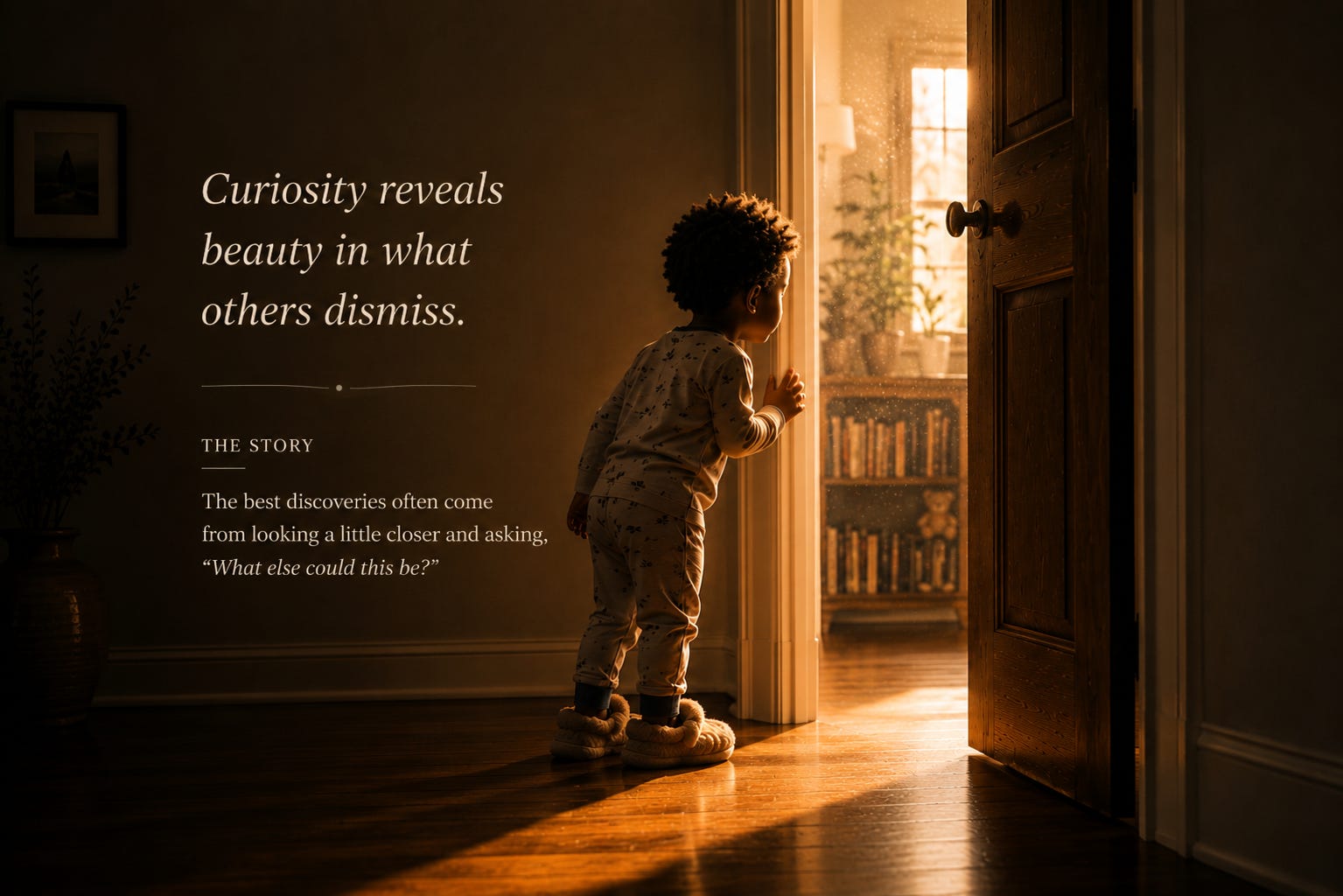
Curiosity doesn’t create possibility. It reveals the possibility judgment never sees.
That’s why curiosity isn’t a soft leadership skill. It’s a strategic discipline.
The conversations that changed my thinking almost always started with someone asking a question the rest of us had stopped asking.
Growing up, I loved watching The Jetsons. Flying cars, video calls, smart homes, and robotic assistants. Back then, it felt like imagination. Today, much of it feels like memory.
Someone imagined that world. Someone else became curious enough to build pieces of it.
That’s possibility.
Curiosity simply reveals it.
Leadership works the same way.
The possibilities are often already in the room. They remain invisible until someone asks a question that allows everyone else to see them.
Here are three ways I’ve observed experienced leaders deepen their curiosity.
1. Delay your conclusion.
Walking into a meeting with a perspective is responsible. Walking in with a verdict is limiting.
I’ve watched exceptional leaders enter conversations prepared, informed, and confident. What separates them is their willingness to let new information reshape what they thought they knew.
A conclusion reached five minutes too early can cost an organization an idea that could change everything.
2. Ask one more question than you think you need to.
Years ago, I worked with a leader who had a simple habit that has stayed with me ever since.
Whenever something intrigued him, or he sensed there was more beneath the surface, he rarely said, “Explain more.”
Instead, he’d ask:
“Can you give me one or two more sentences about that?”
I loved that question because it never felt like an interrogation. It felt like an invitation. It made people feel like there was still something worth discovering in what they had to say.
I’ve watched that simple question become a springboard for deeper thinking. People offered more context. Hidden assumptions surfaced. Better ideas emerged. Sometimes the most valuable insight wasn’t in the original answer. It was waiting in those one or two additional sentences.
I’ve noticed the most curious leaders don’t just ask better questions.
They ask questions people want to answer.
The most dangerous thing judgment steals isn’t the right answer. It’s the next question.
3. Become curious about the parts, not just the whole.
I’ve been guilty of evaluating ideas too quickly, sometimes because I was confident and sometimes because I was busy. Neither made me right. I’ve also watched other leaders do the same.
Many ideas get evaluated too quickly.
Will it work?
Should we do it?
Is it the right direction?
Experienced leaders often ask a different question:
Which part of this deserves another look?
They understand that the strength of an idea isn’t always found in the entire proposal. Sometimes the breakthrough lives inside one overlooked insight, one unexpected connection, or one assumption worth challenging.
Curiosity slows the rush to judgment just long enough for us to notice a possibility we would have otherwise missed.
The longer I lead, the less convinced I am that curiosity is something we outgrow. I think the opposite is true.
Judgment ages us.
Curiosity keeps us becoming.
I know that’s true in life.
I think it’s true in leadership, too.
The next time you’re certain you already know what you’re looking at, pause for a moment and ask yourself:
What possibility am I unable to see because I’ve already decided what this is?